Skip to content
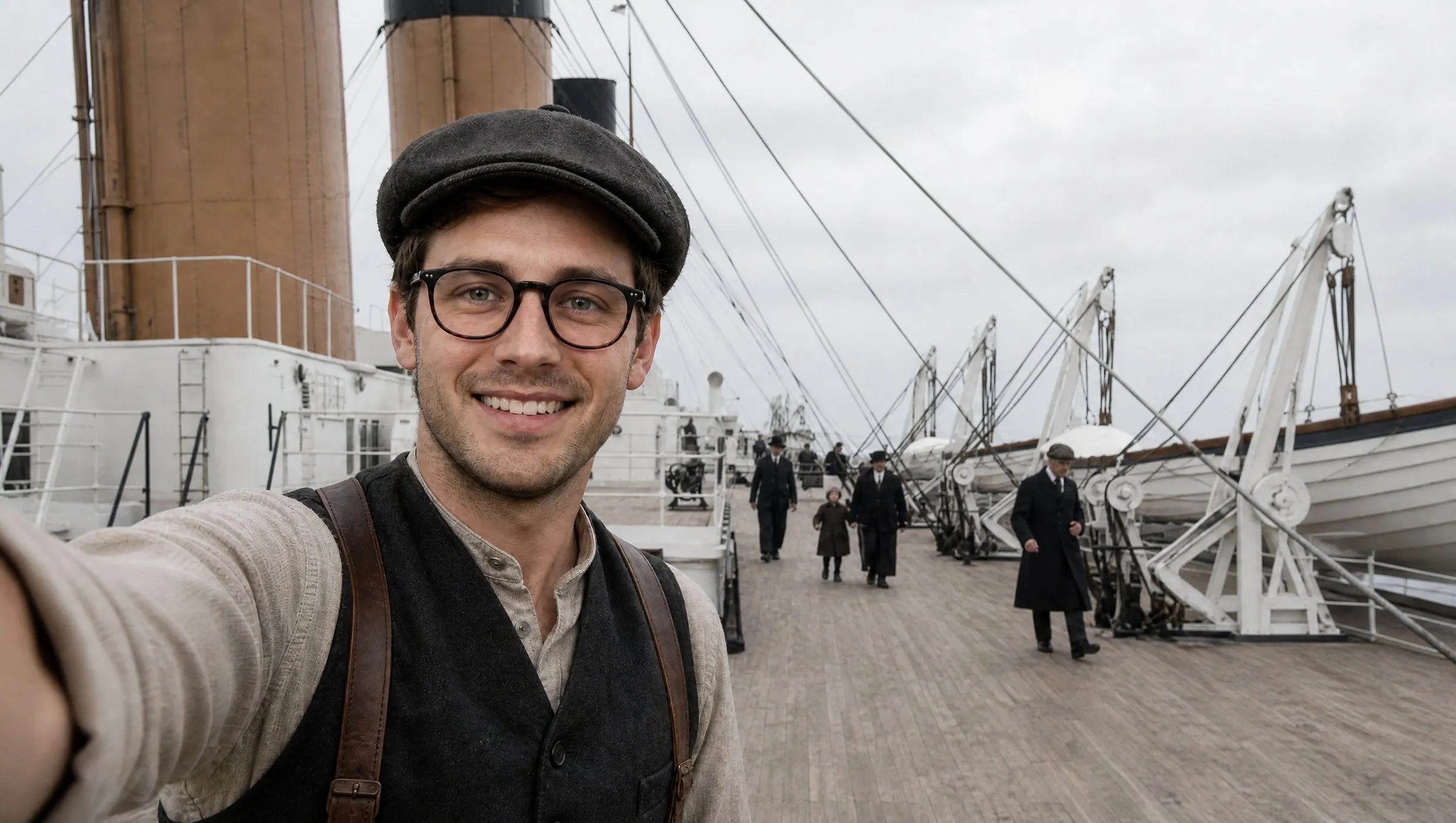
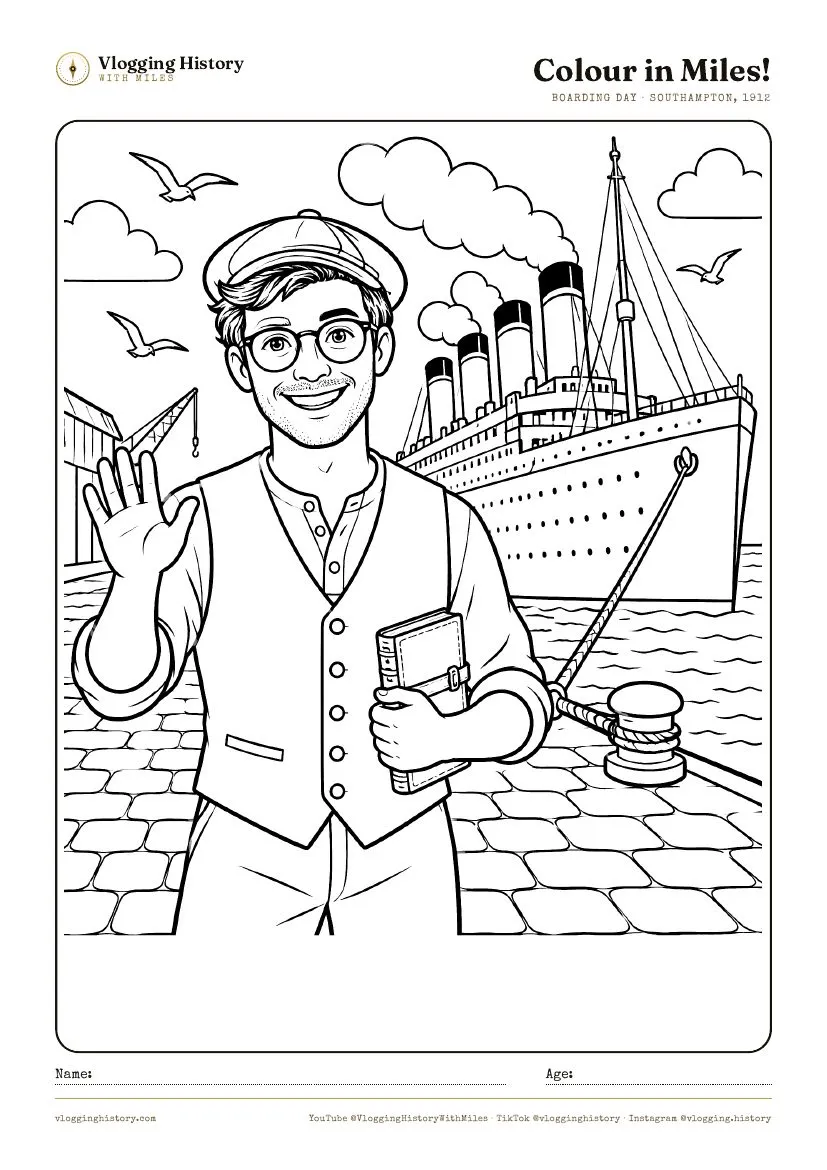
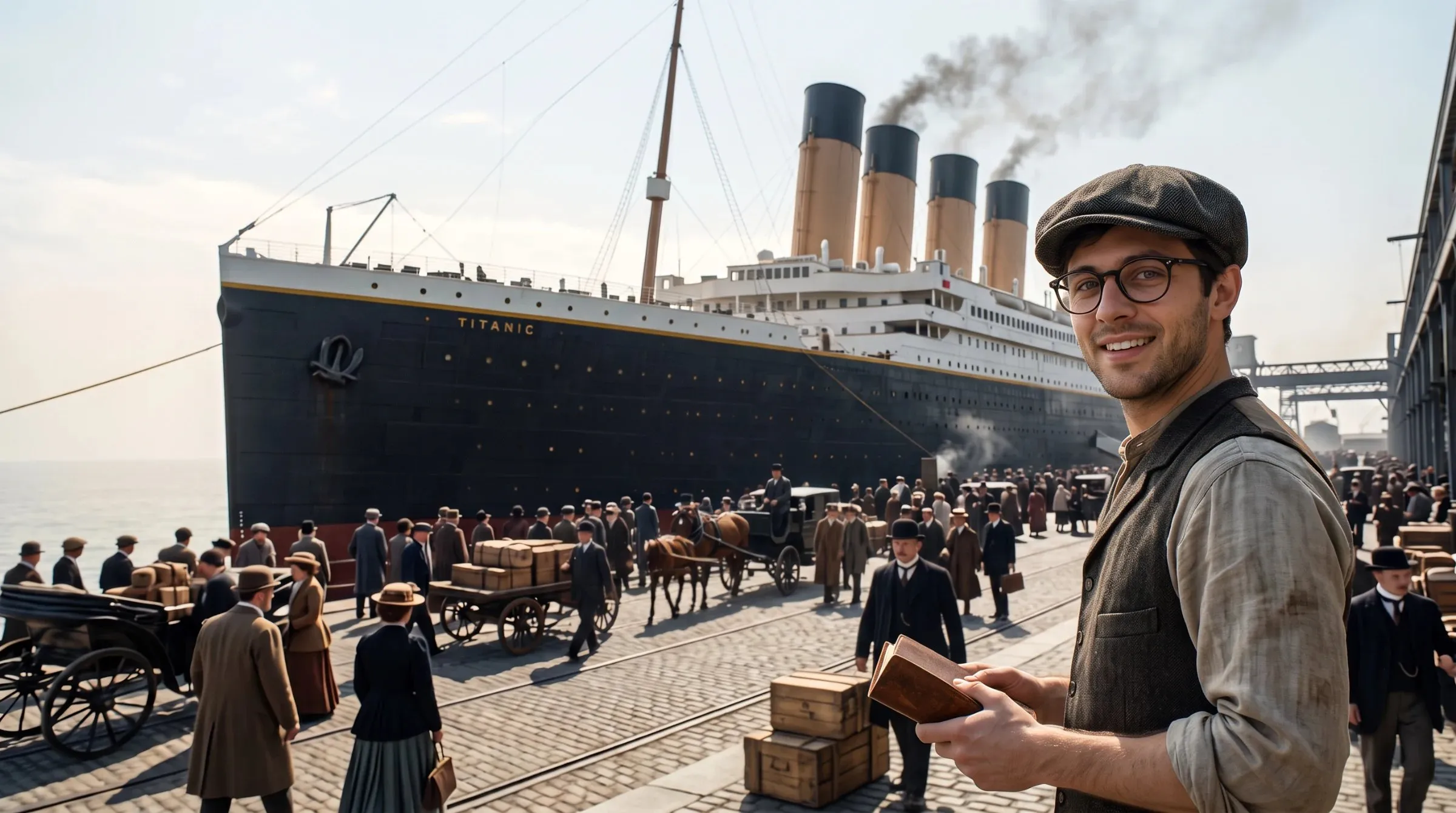
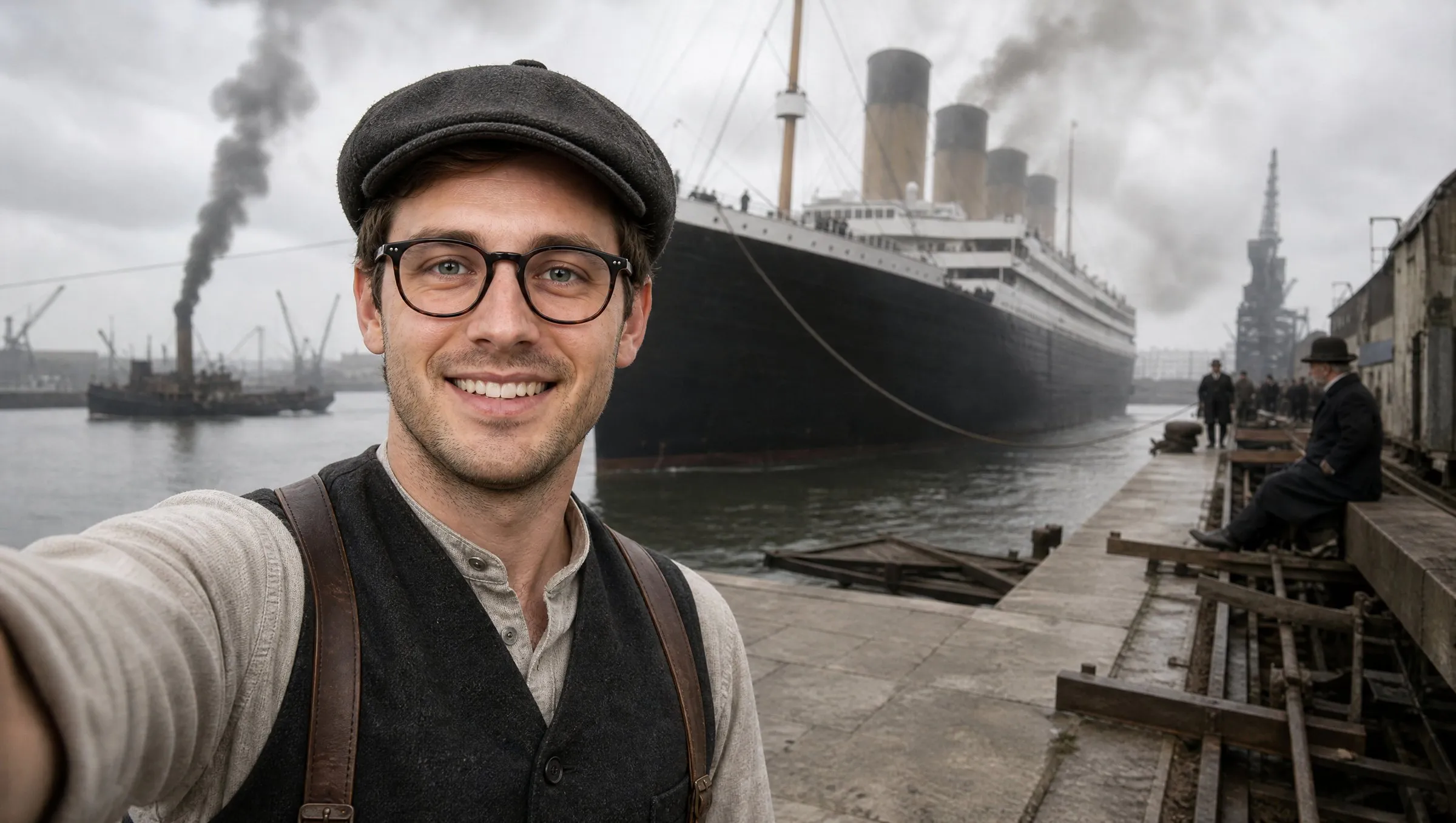
Miles in a flat cap and waistcoat on the Southampton quay, with RMS Titanic towering behind him

Episode 01 · The Edwardian Age

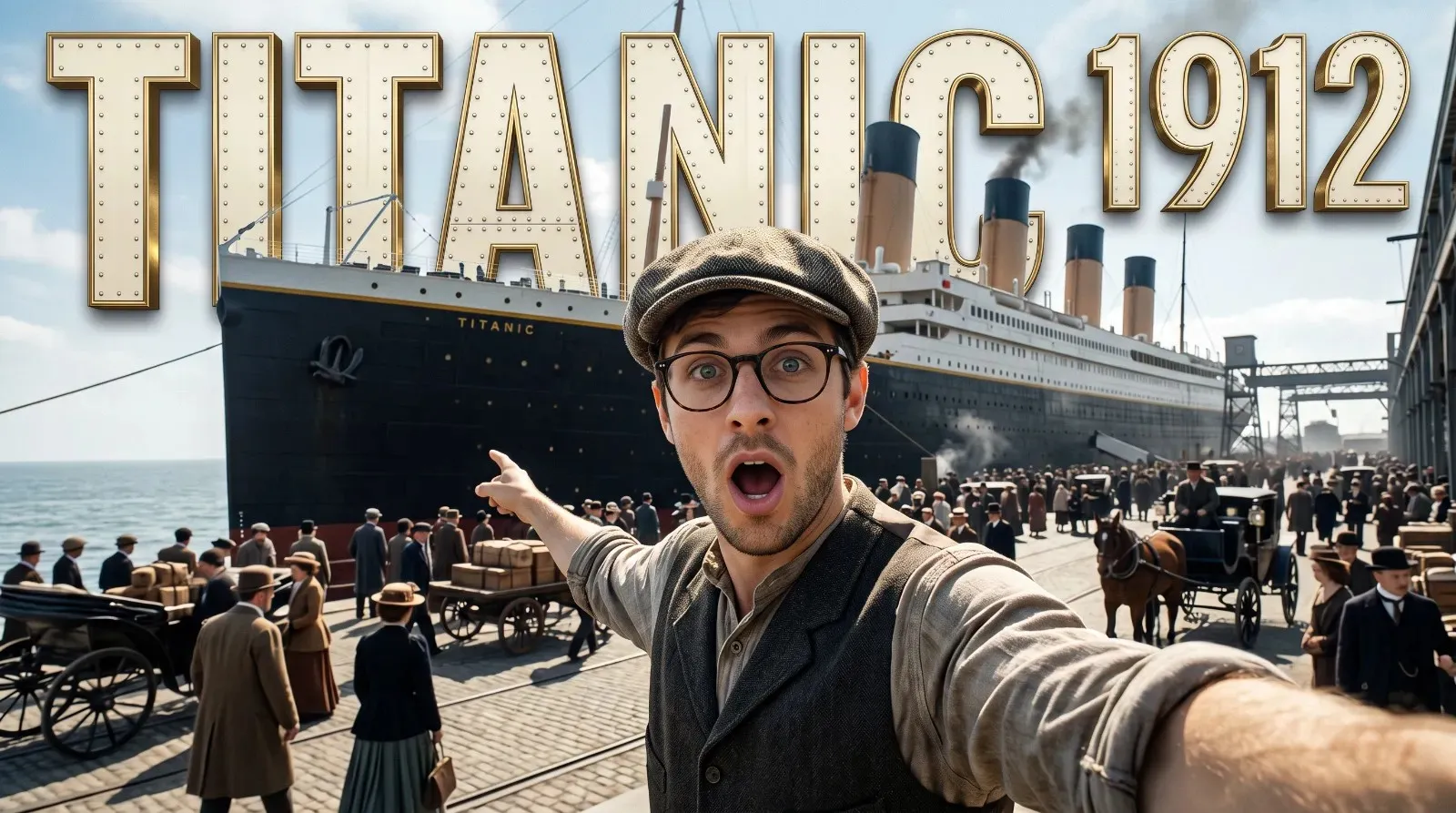
Titanic, 1912

Miles boards RMS Titanic at Southampton and heads below decks, into the heat of Boiler Room 6 and the corridors of third class, to find out what life on the world's most famous ship was really like, and why she sank.

Episode
01
When
April 10–15, 1912
Where
Southampton to the North Atlantic
Runtime
12 min

Watch the episode

What It Was Actually Like Inside the Titanic (1912 Vlog)

Chapters · tap to jump

The real history · Episode guide

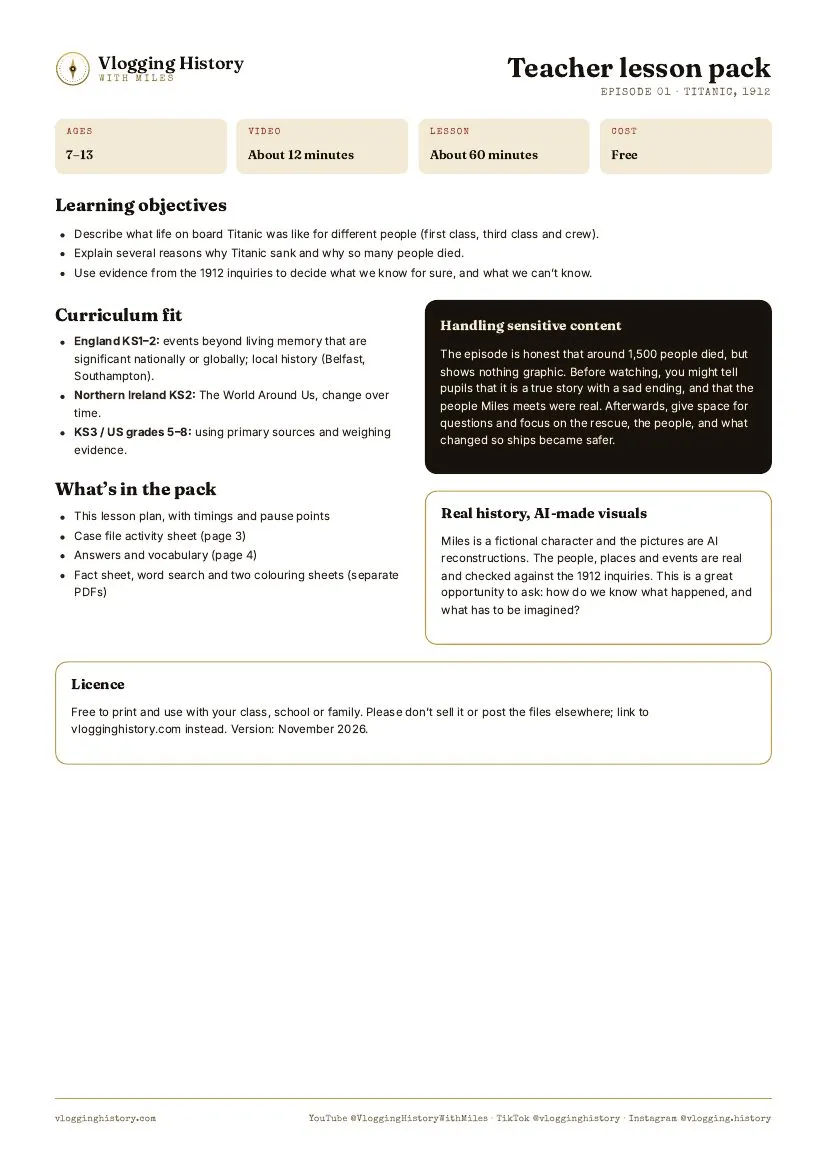
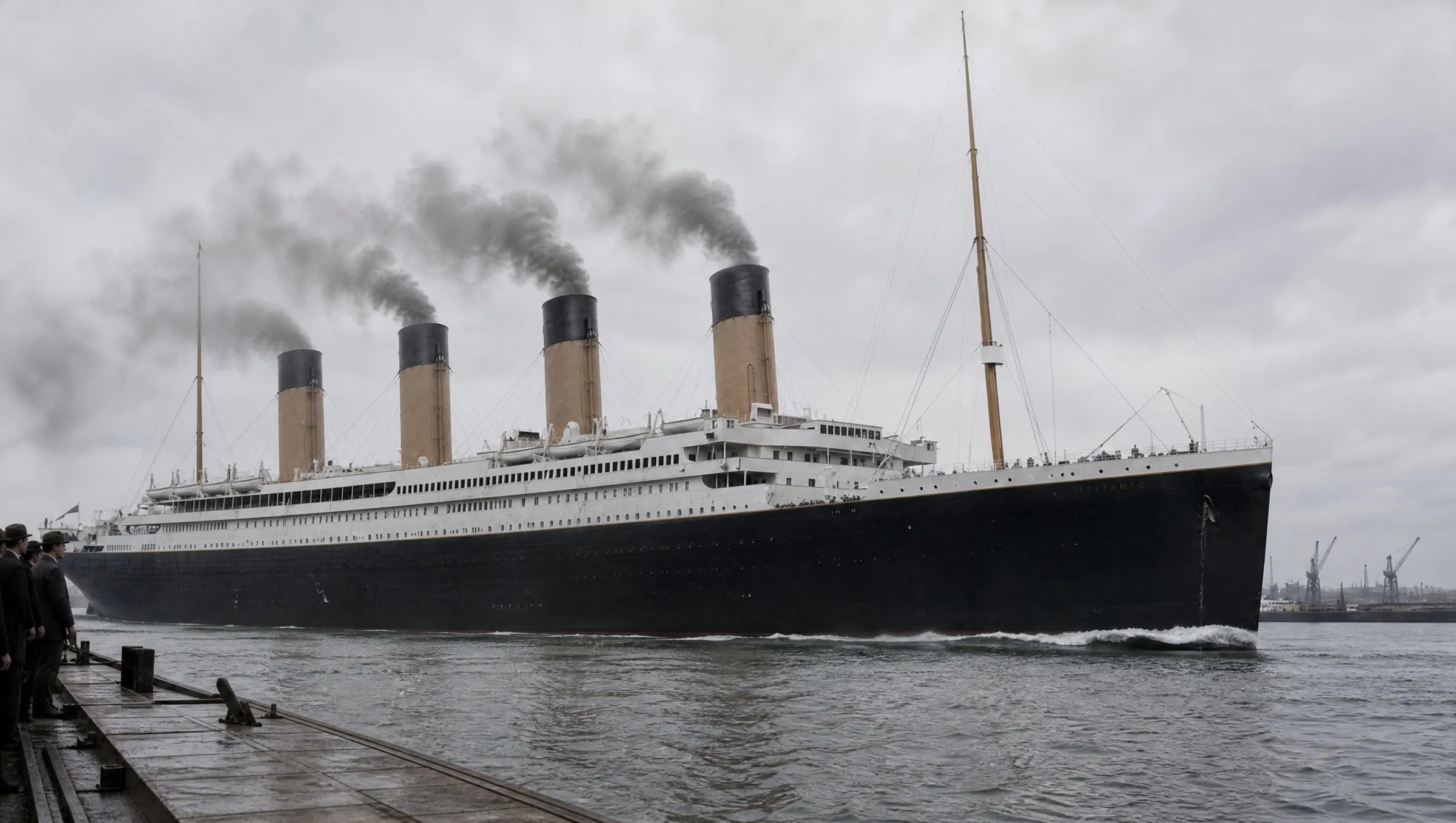
On the morning of April 10, 1912, thousands of people crowded the quay at Southampton to watch the largest ship ever built at the time get ready to sail. In this episode, Miles joins them with his camera, walks up the gangway and spends the next five days aboard RMS Titanic.

He knows how the story ends. Everyone around him doesn’t. And as Miles says before he steps aboard: he can’t change what happens. He’s just here to show you why.

The biggest ship in the world

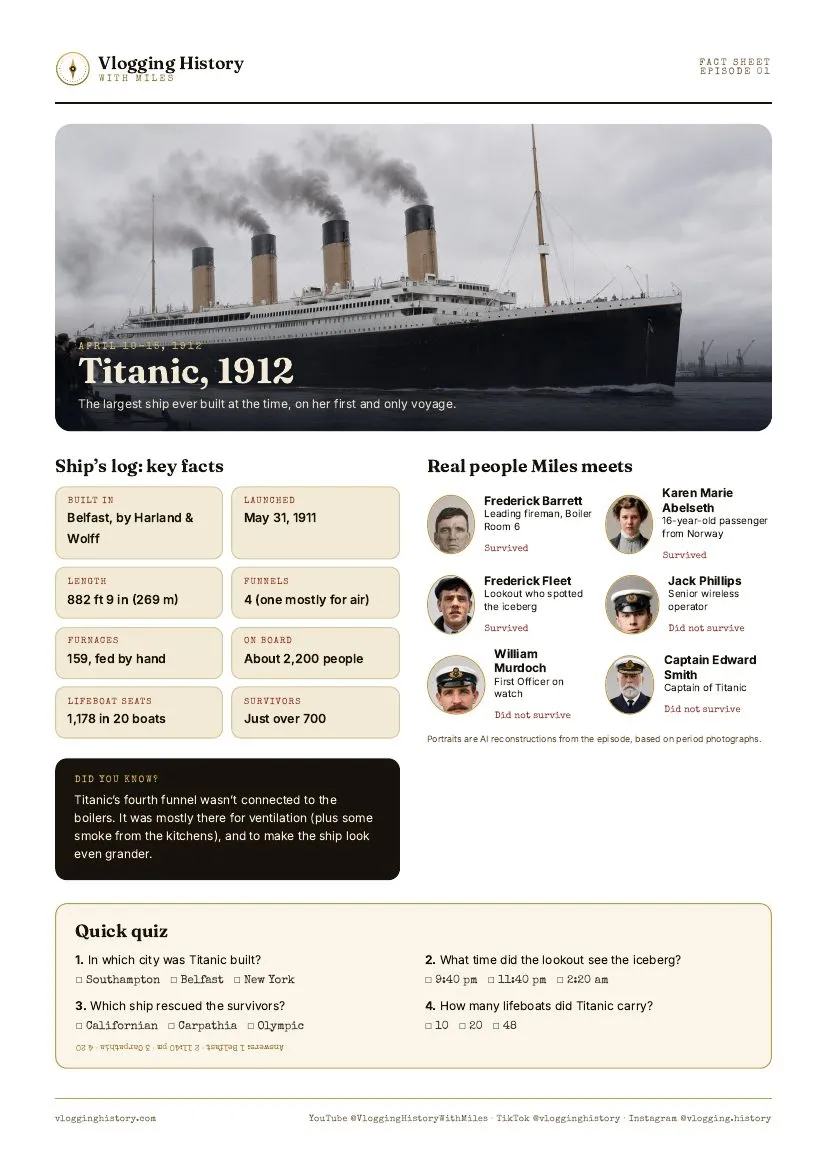
Titanic was built at the Harland & Wolff shipyard in Belfast and launched on May 31, 1911. She was 882 feet 9 inches long, longer than two and a half football pitches, and her four giant funnels made her look unstoppable. Here’s a secret Miles discovers: the fourth funnel didn’t carry smoke from the boilers at all. It was mostly there for ventilation, and to make the ship look even grander.

She left Southampton at noon on April 10, picked up more passengers at Cherbourg in France that evening, and called at Queenstown in Ireland (today called Cobh) the next day. Then she turned west into the open Atlantic, heading for New York at around 21 to 22 knots.
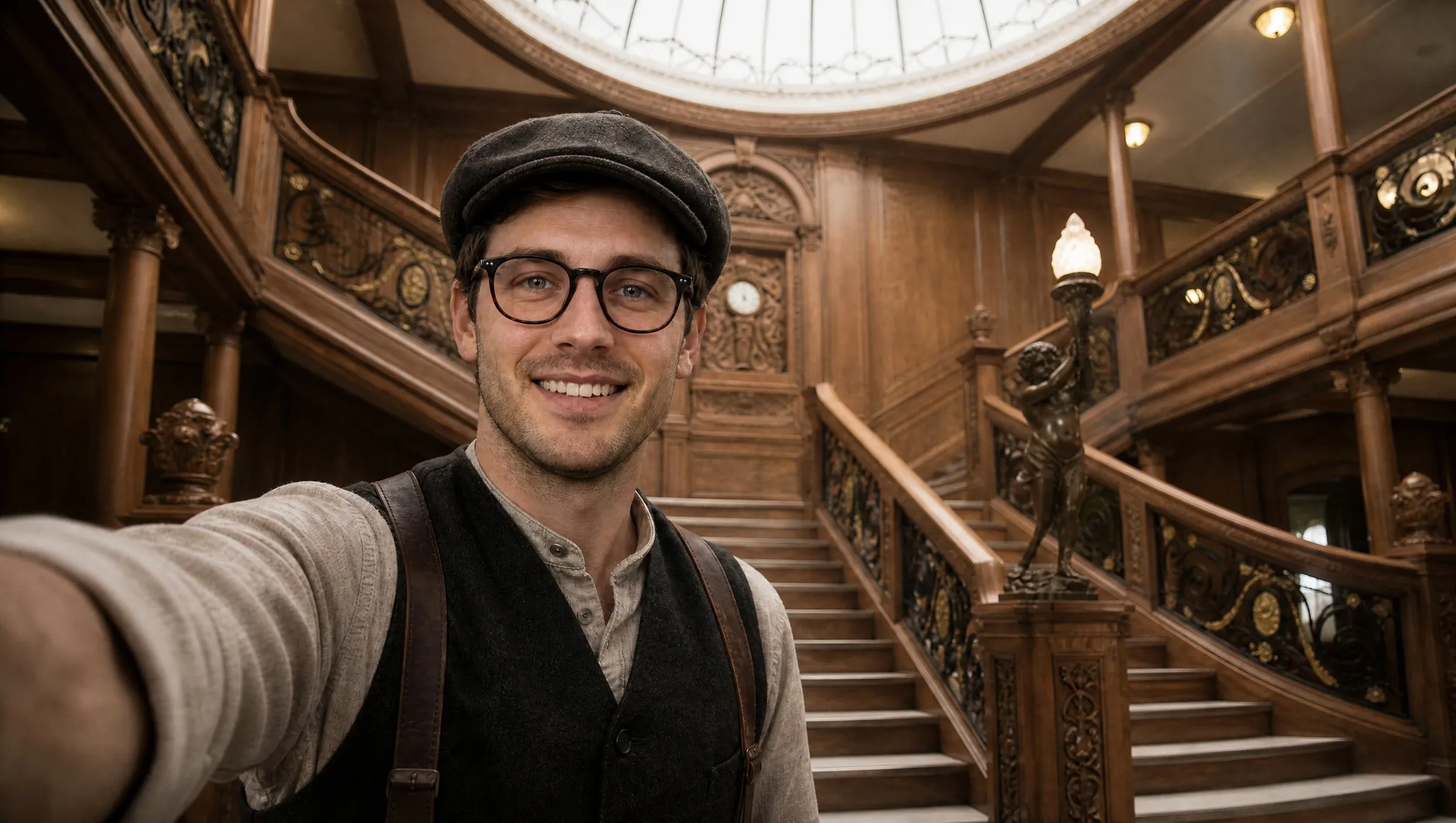
Miles on the Grand Staircase beneath the glass dome
✦The First Class Grand Staircase, all carved oak and wrought iron.

From the Grand Staircase to Scotland Road

Up top, first class was astonishing: the Grand Staircase under its glass dome, a writing room, even a swimming pool and Turkish baths. But Miles is more interested in the parts of the ship most passengers never saw. He follows the crew down Scotland Road, the long working corridor that ran along E Deck, nicknamed after a busy street in Liverpool.

Down in Boiler Room 6

Deep inside the ship, teams of firemen and trimmers worked in shifts to keep Titanic moving. They shovelled coal into 159 furnaces by hand, in heat so fierce that many worked stripped to their vests.

Miles picks up a shovel beside Frederick Barrett, the leading fireman in Boiler Room 6. It’s hot, loud and exhausting, and it’s exactly where Barrett was standing when the sea came bursting through the side of the ship. His evidence to the British Inquiry, given just weeks later, is one of the most vivid eyewitness accounts we have.
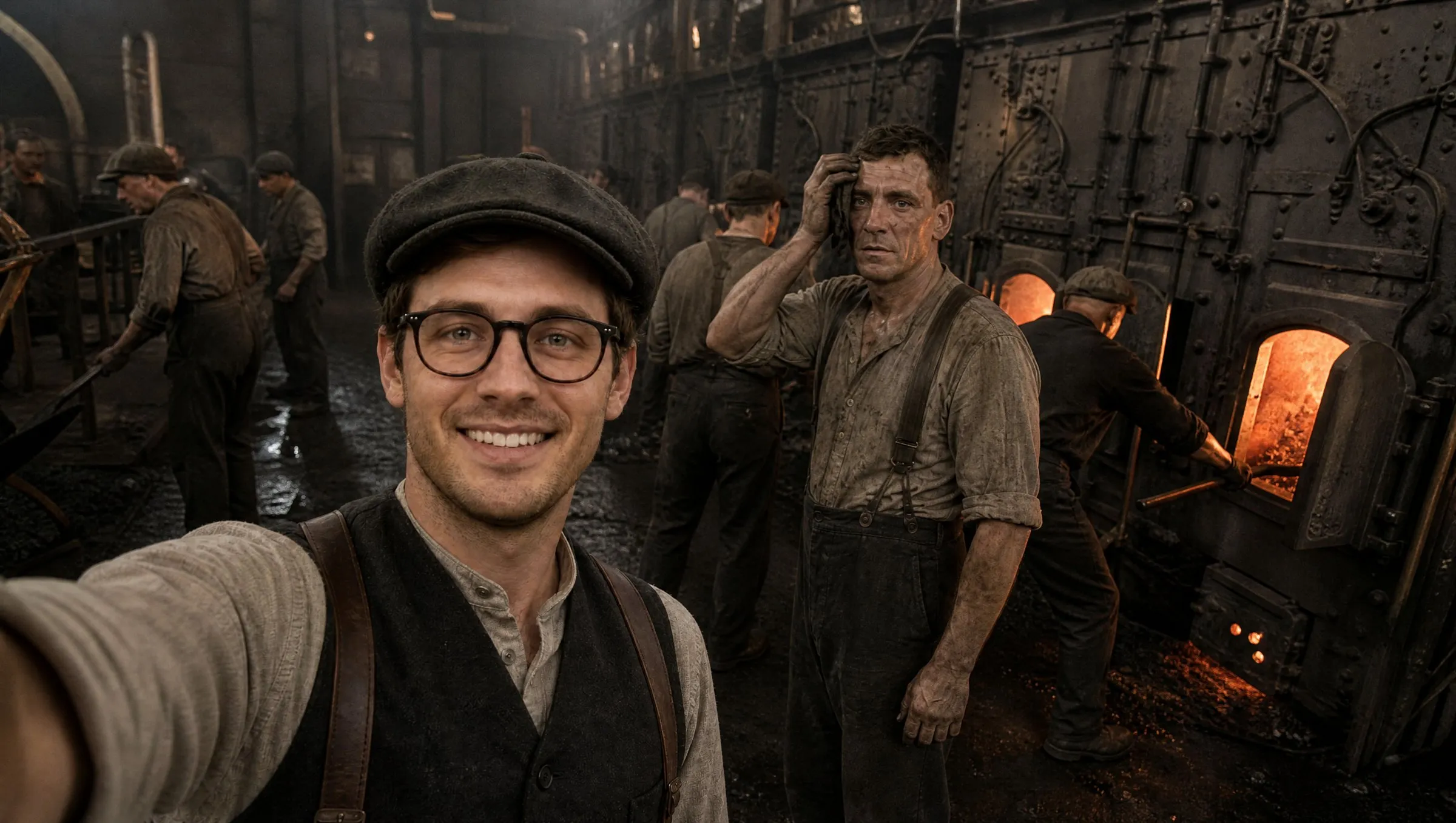
Miles in Boiler Room 6 with stokers working the furnaces
✦Boiler Room 6. The heat is the first thing you notice.

Life in third class

Third class on Titanic was far more comfortable than on most ships of the time, with clean cabins, a dining saloon and a general room for singing and games. Miles meets Karen Marie Abelseth, a 16-year-old from Norway travelling to join her sister in California, and sees the voyage through her eyes.

The missing ice warning

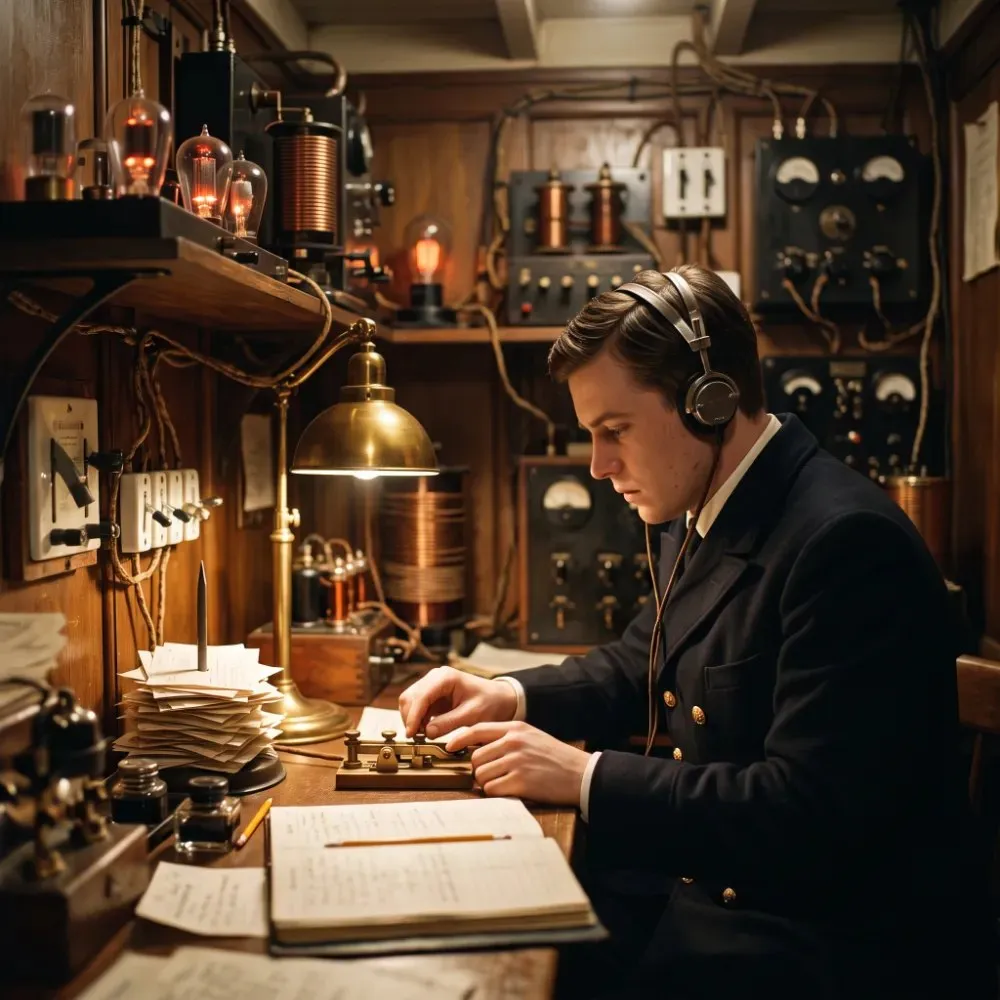
During April 14, Titanic’s wireless operators received several warnings about ice. At around 9:40 pm, the SS Mesaba sent one describing ice directly in Titanic’s path. Senior operator Jack Phillips was busy clearing a backlog of passengers’ messages, and the British inquiry found that the warning never reached the bridge. Phillips didn’t survive, so exactly why it wasn’t passed on is something we can’t know for certain.

“The message wasn’t lost. It was sitting on the ship the entire time.” — Miles

Calm seas, no moon

That night the sea was flat calm and there was no moon. That mattered more than you might think: with no waves breaking at its base and no moonlight, an iceberg was almost invisible until it was very close.

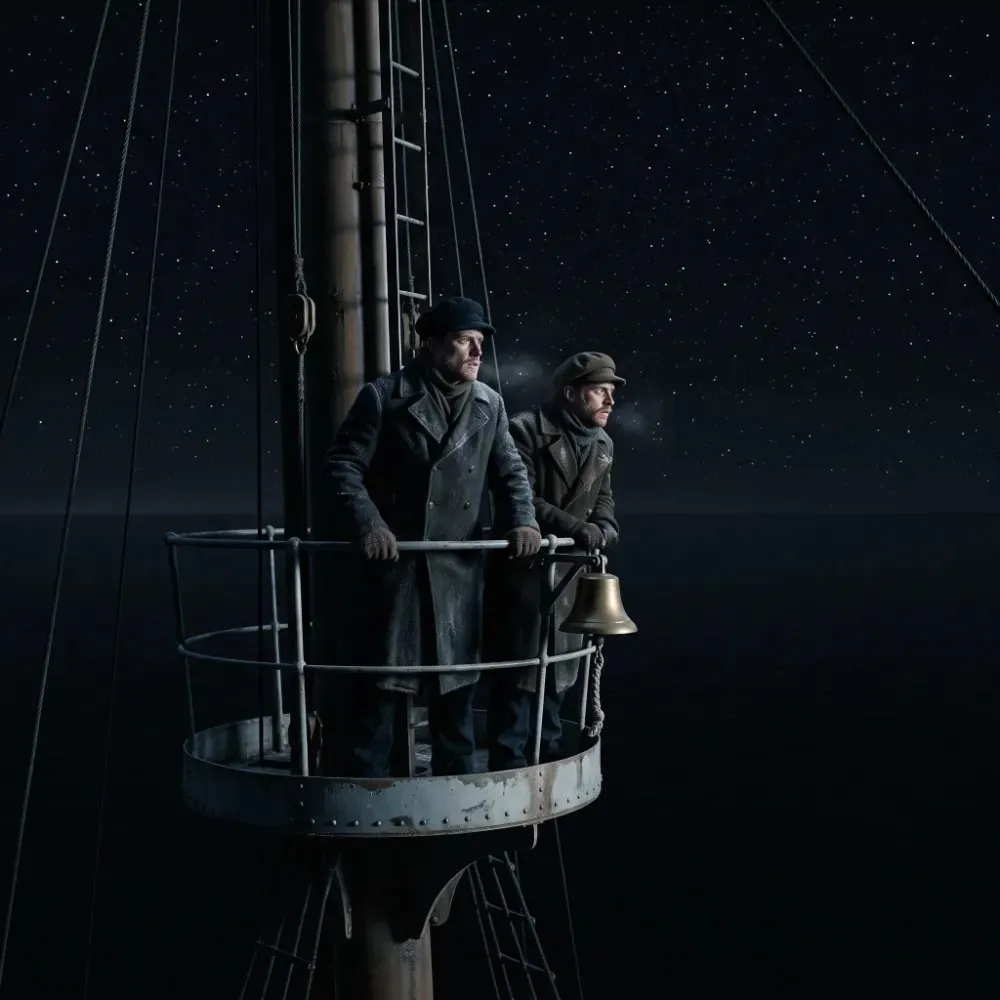
At 11:40 pm, lookout Frederick Fleet spotted a dark shape dead ahead. He rang the warning bell three times and telephoned the bridge: “Iceberg, right ahead!” First Officer William Murdoch ordered the ship to turn, but there wasn’t enough time.
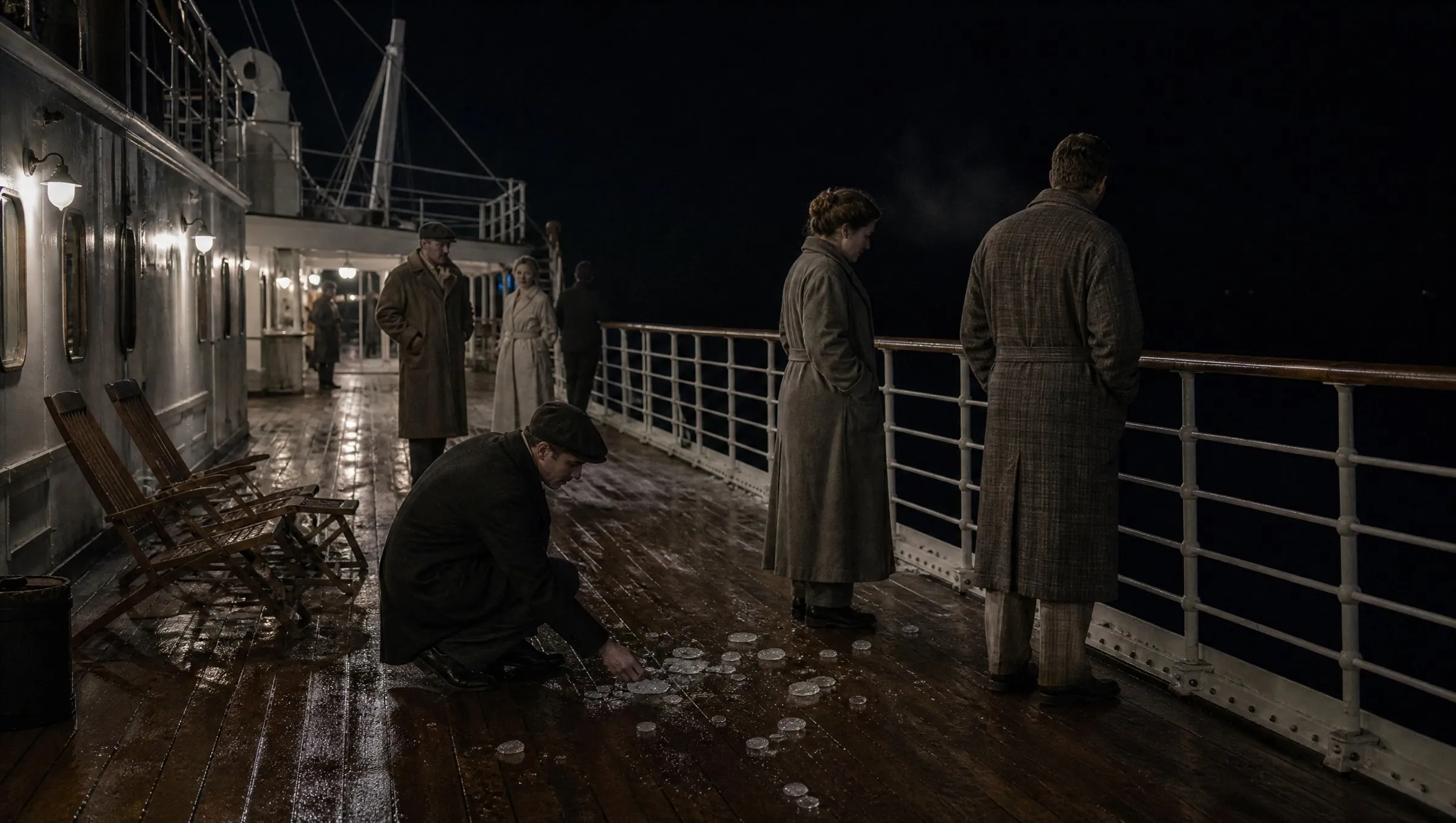
Titanic's well deck at night, with passengers looking at chunks of ice on the deck
✦After the collision, chunks of ice lay scattered on the well deck.

Why did Titanic sink?

Titanic had sixteen watertight compartments. She was designed to stay afloat with any two of them flooded, or even the first four. But the iceberg damaged her across several compartments at once. As the bow sank lower, water spilled over the tops of the bulkheads and into the next compartment, then the next, like water filling an ice-cube tray.

The half-empty lifeboats

Titanic carried 20 lifeboats with room for 1,178 people, for about 2,200 on board. That was completely legal. The problem wasn’t that Titanic broke the lifeboat rules. It’s that the rules were hopelessly out of date for ships this big. And in the confusion, many of the first boats were lowered only part full.

Californian and Carpathia

Two ships, two very different stories. The nearby SS Californian had stopped for the night because of the ice, and her wireless operator had gone to bed, so he never heard Titanic’s distress calls. It was a second communication failure on the same night.

Further away, aboard RMS Carpathia, wireless operator Harold Cottam still had his headset on as he got ready for bed. He caught the distress call by chance, woke his captain, and Carpathia turned and raced north through the ice.
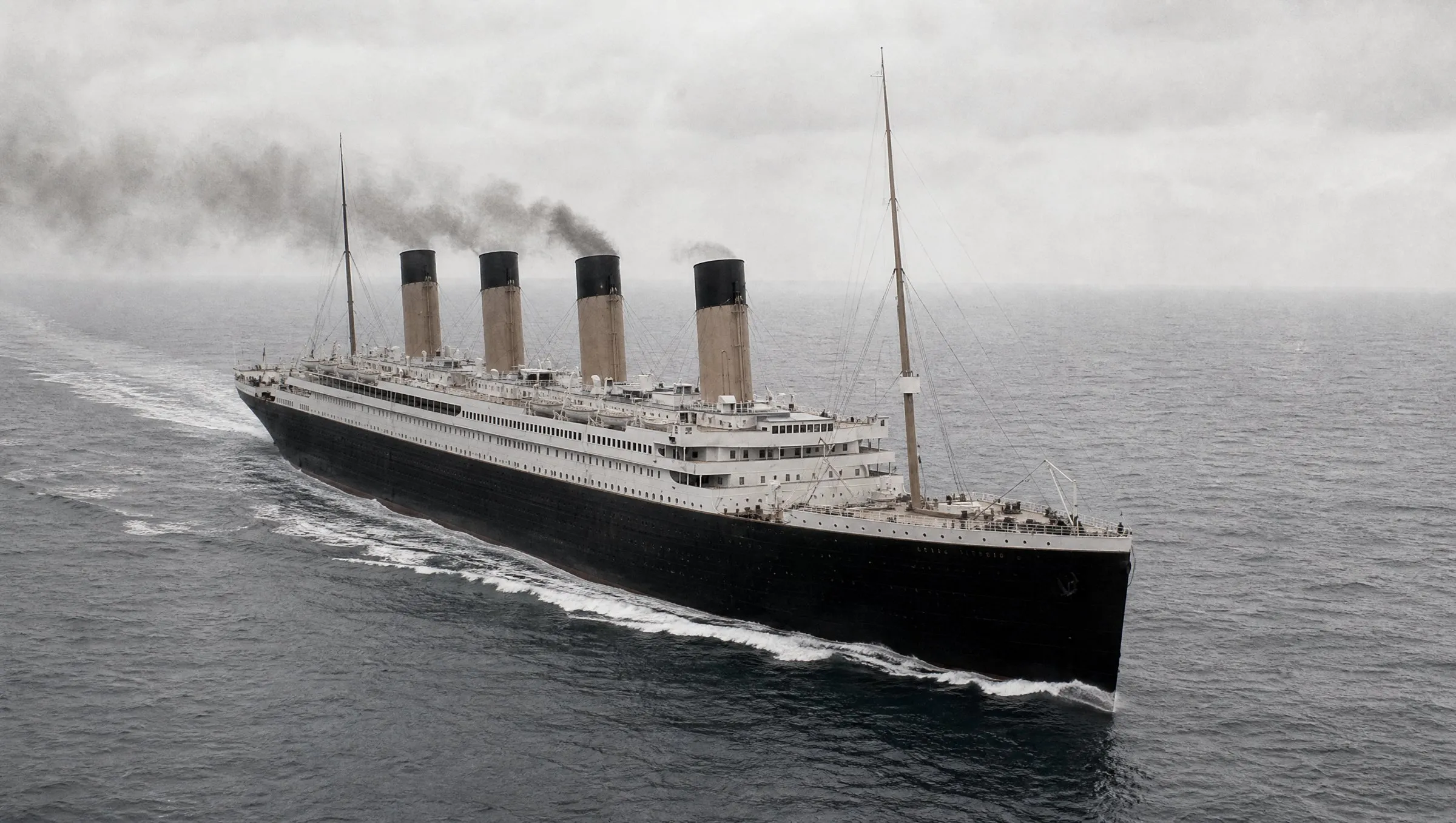
Titanic steaming across the grey North Atlantic
✦The North Atlantic, a few days earlier.

2:20 a.m.

As the ship tilted steeply, the band kept playing. At 2:20 am on April 15, about two hours and forty minutes after the collision, the lights failed and, moments later, Titanic sank. Carpathia arrived at dawn and picked up just over 700 survivors from the lifeboats. Around 1,500 people lost their lives.

What changed, and Belfast today

The disaster changed the rules of the sea. The first International Convention for the Safety of Life at Sea was agreed in 1914, calling for enough lifeboat places for everyone and round-the-clock radio watches. The First World War stopped it coming into force, but countries brought in many of the same rules themselves, and a later version finally took effect in 1933. The International Ice Patrol was set up to track icebergs, and it still does that job today.

Miles ends the episode back in the present day, in Belfast, where the slipways that built Titanic now sit beside the Titanic Belfast museum.

How we researched this episode

Every key moment was checked against what people actually said at the time, especially the witness testimony from the British Wreck Commissioner’s Inquiry and the US Senate Inquiry of 1912. Where historians still disagree, we say so. You can read more about how we research.
Follow the route

Where Titanic sailed

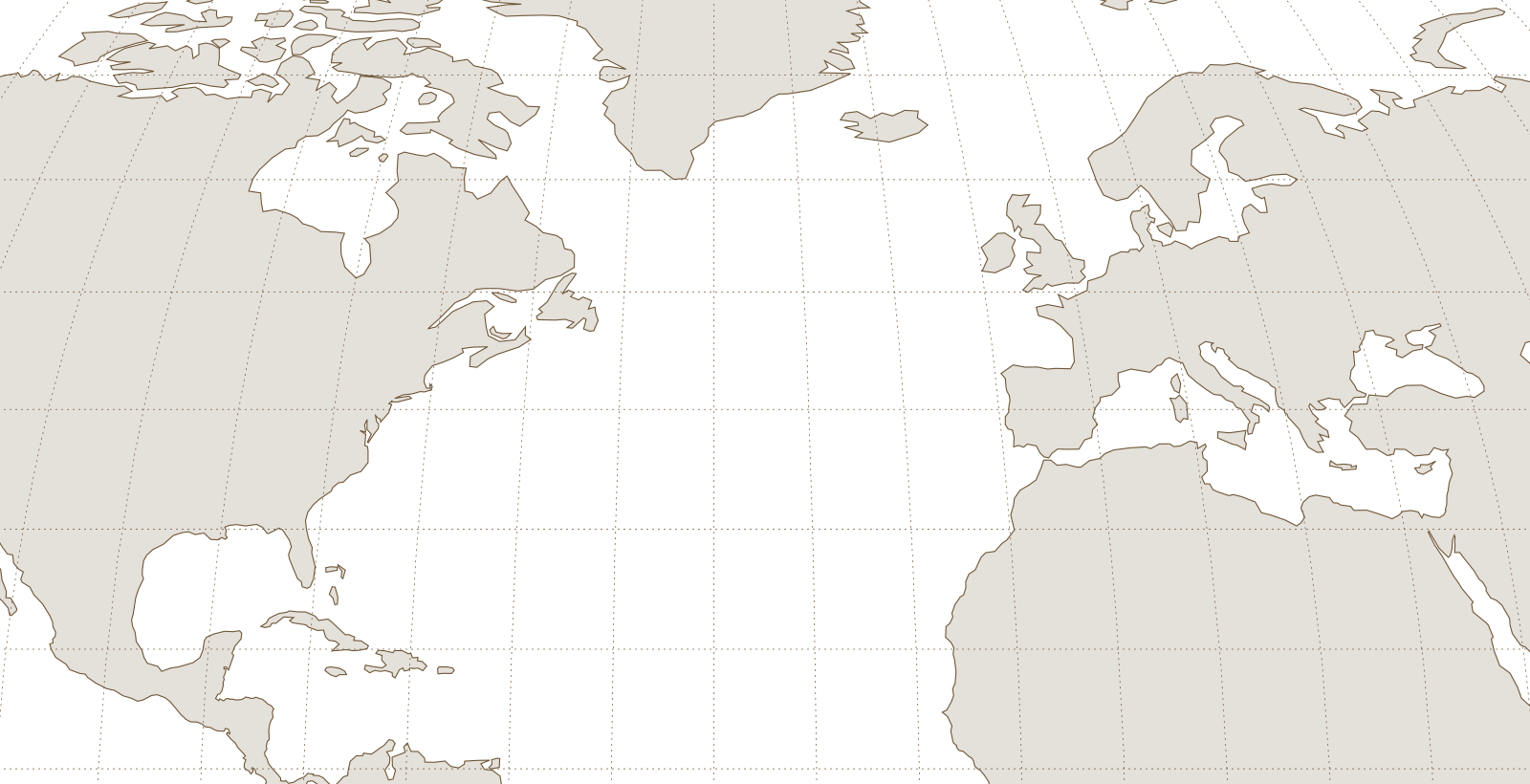
From the shipyard in Belfast to the cold North Atlantic. Press play to watch the voyage, or tap a port to see what happened there.

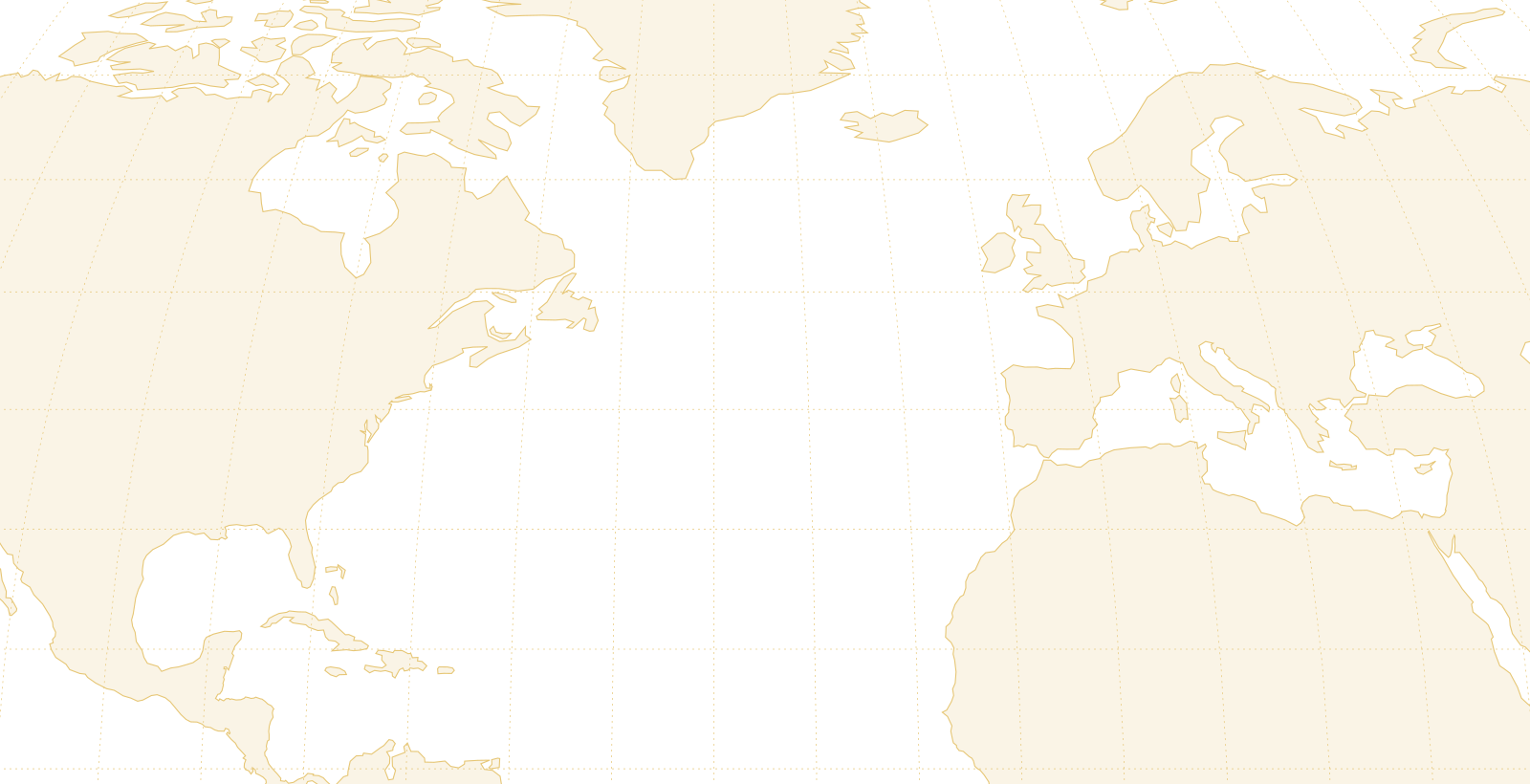
Titanic’s maiden voyage, April 1912A chart of the North Atlantic showing Titanic’s route from Belfast to Southampton, Cherbourg and Queenstown, across the Atlantic to where she sank on April 15, 1912, and her planned route on to New York.N O R T H   A T L A N T I C   O C E A NPlanned route, never completedNBelfastSouthamptonCherbourgQueenstown (Cobh)Where she sankNew York
SWIPE THE CHART ↔

Chart · April 1912

The maiden voyage

Apr 2, 1912

Belfast

Built at Harland & Wolff and launched in May 1911, Titanic finishes her sea trials and sails round to Southampton (dotted line).

Timeline

Hour by hour

Scroll through the voyage. Watch what happens to the light.

  1. Apr 2

    Titanic finishes her sea trials and leaves Belfast for Southampton.

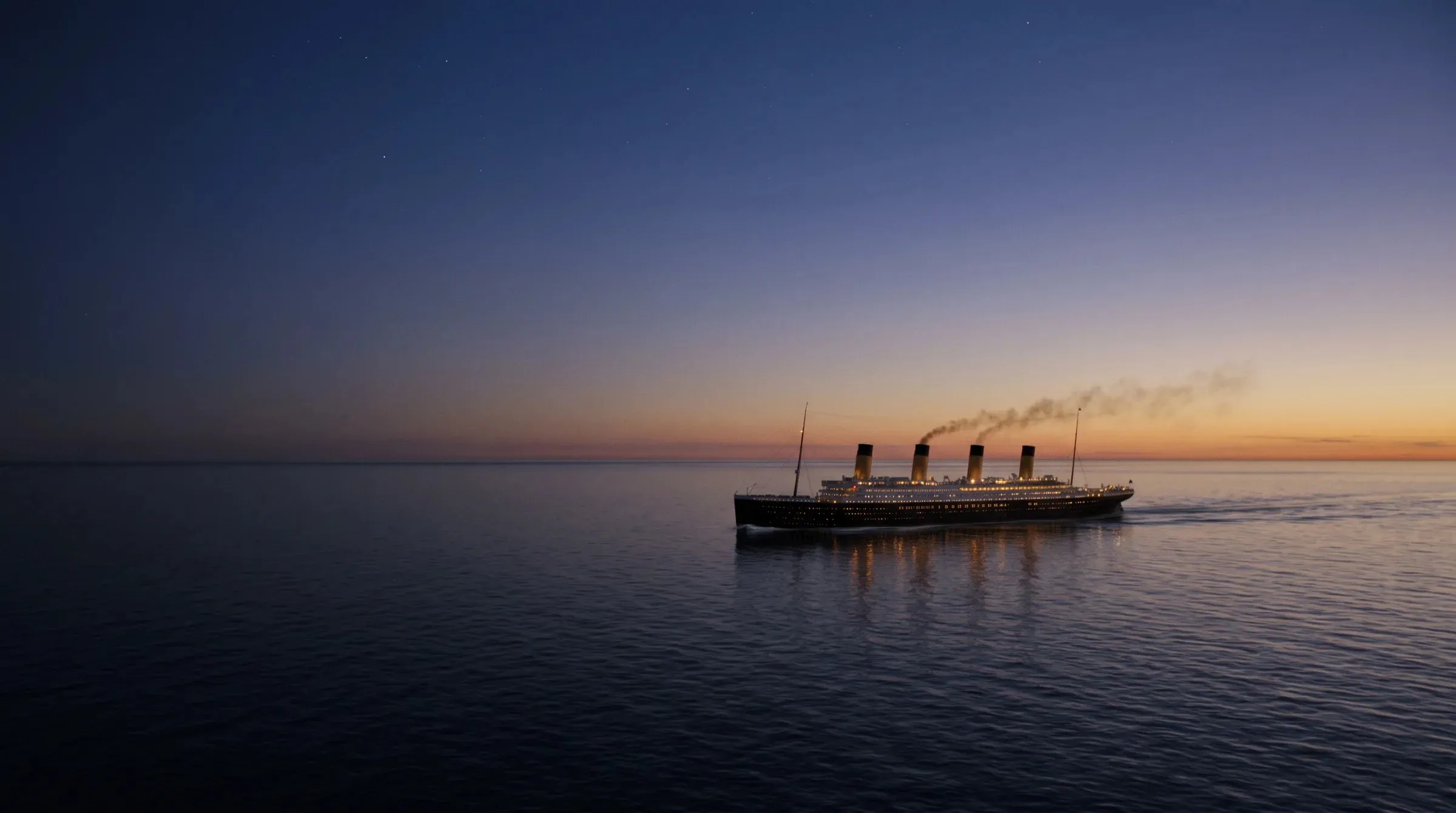
    Titanic steaming out to sea
  2. Apr 10 · Noon

    Titanic leaves Southampton on her maiden voyage, with Miles on board.

    Miles on the Southampton quay
  3. Apr 10 · Evening

    She calls at Cherbourg, France, to pick up more passengers.

    Titanic at dusk
  4. Apr 11 · Afternoon

    After a stop at Queenstown (now Cobh), Ireland, she heads out into the Atlantic.

    Titanic out on the open Atlantic
  5. Apr 14 · 9:40 pm

    The SS Mesaba warns of heavy ice directly ahead. The inquiry found the message never reached the bridge.

    A wireless operator at work in the Marconi room
  6. Apr 14 · 11:40 pm

    Lookout Frederick Fleet spots the iceberg and rings the bell three times: “Iceberg, right ahead!”

    Two lookouts in the crow’s nest on a dark night
  7. Apr 15 · 12:25 am

    Carpathia’s wireless operator, Harold Cottam, catches the distress call. His ship turns towards Titanic.

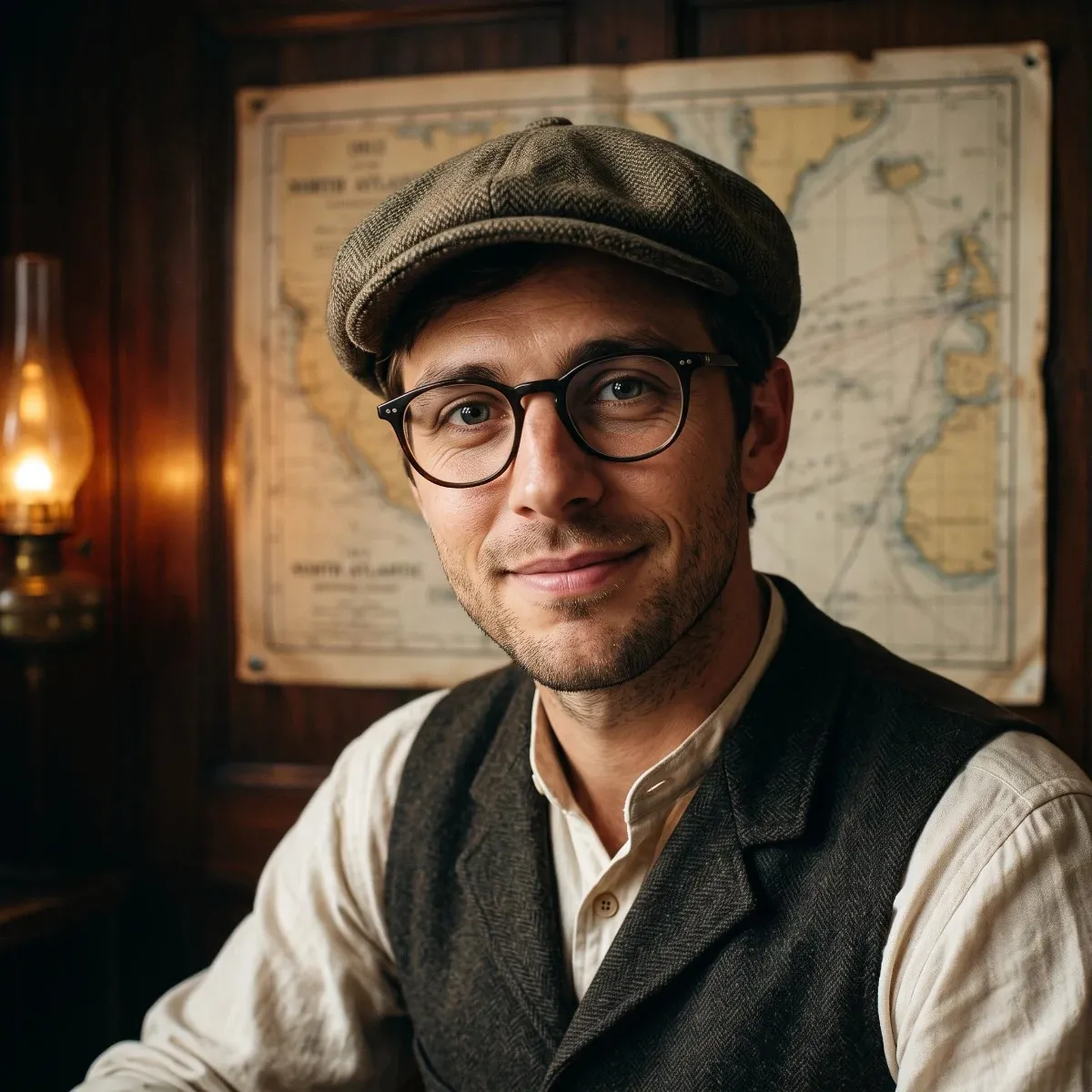
    Miles in the chart room
  8. Apr 15 · 12:45 am

    The first lifeboat is lowered, far from full.

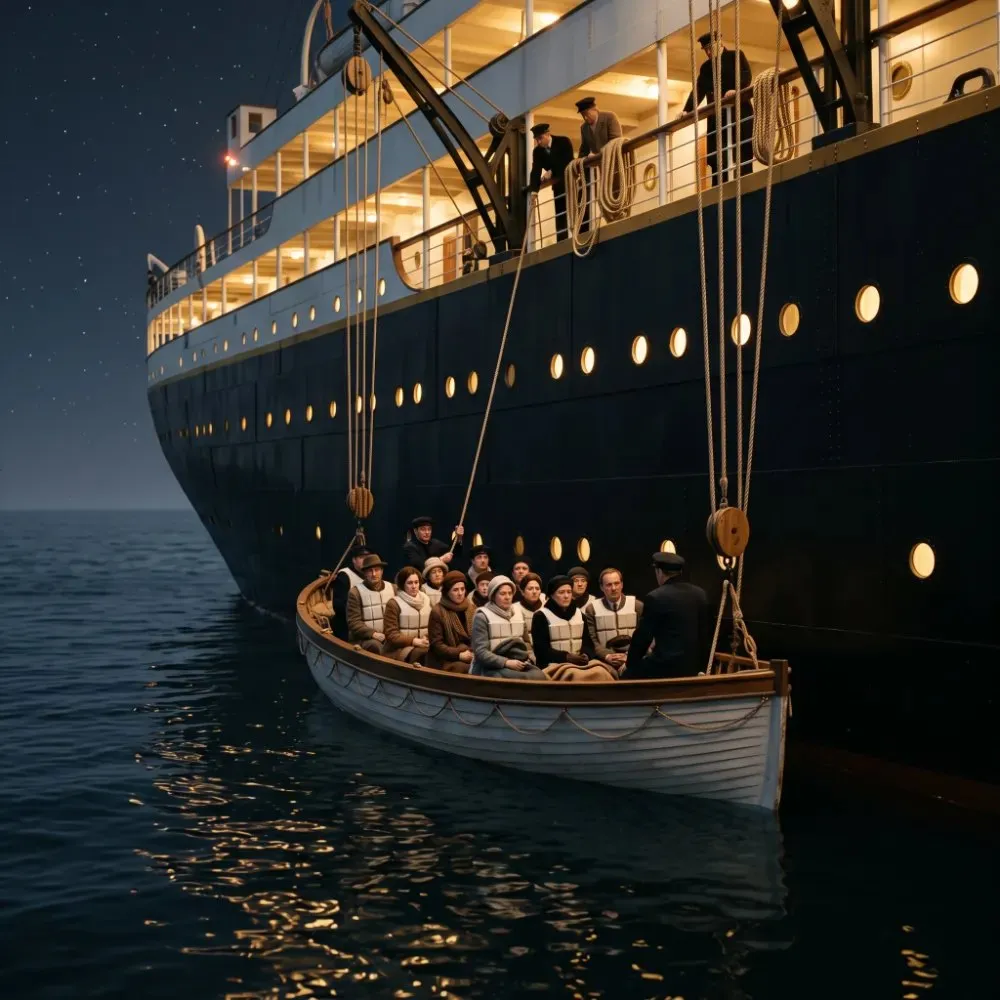
    A lifeboat being lowered beside the lit-up ship
  9. Apr 15 · 2:20 am

    Moments after the lights fail, Titanic sinks, two hours and forty minutes after the collision.

    The well deck at night
  10. Apr 15 · About 4:00 am

    Carpathia arrives at dawn and begins picking up survivors from the lifeboats.

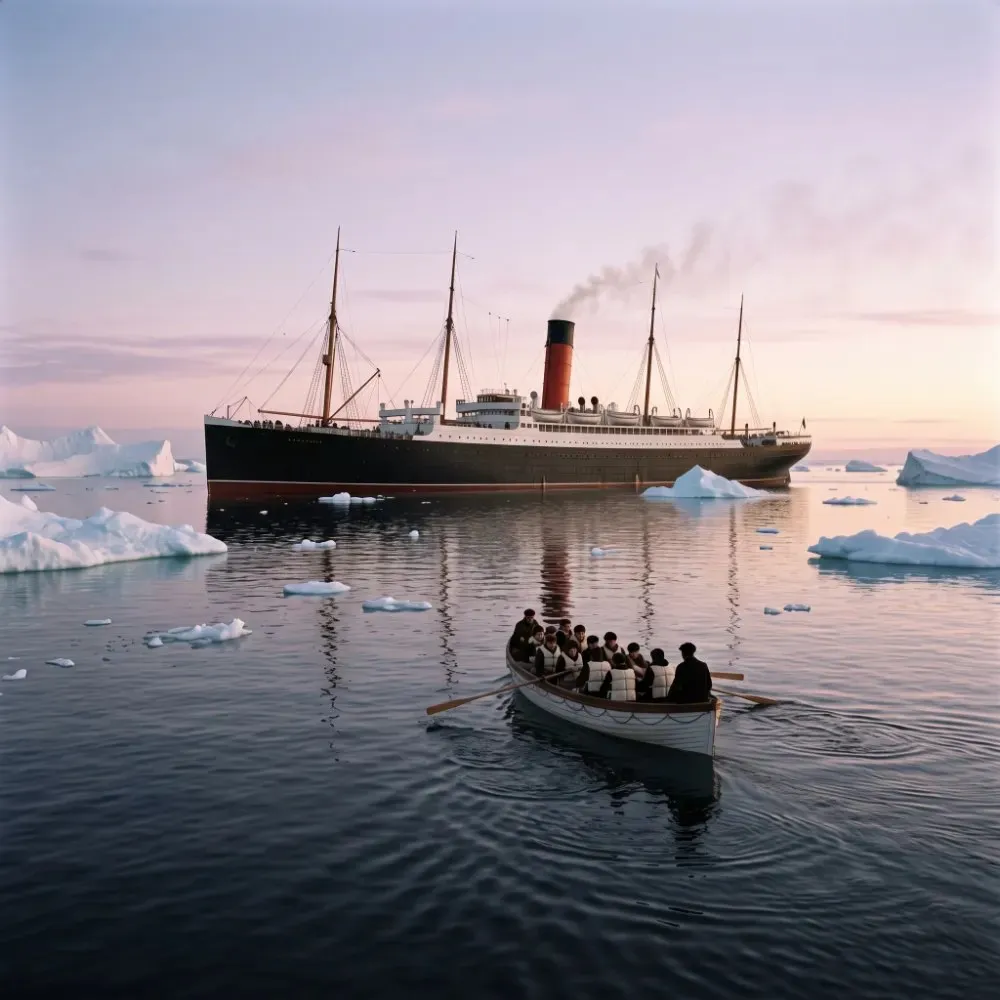
    Carpathia at dawn among the icebergs, with a lifeboat rowing towards her
  11. Apr 18

    Carpathia reaches New York with just over 700 survivors.

    Miles on the boat deck

Be the historian

Case file: the missing warning.

On April 14, 1912, Titanic’s wireless room picked up at least six warnings about ice. Some reached the officers steering the ship. Some didn’t. Read each telegram and the clue from the inquiries, then decide what the evidence shows. Some answers really are uncertain, and saying so is good history.

0 of 6 solved · 0 correct

  1. Marconi wireless · April 14

    SS Caronia

    9:00 am

    Westbound ships report icebergs, “growlers” and field ice ahead, across the area Titanic will cross.

    Clue from the inquiries

    Captain Smith sent a reply thanking the Caronia for the warning. Second Officer Lightoller later told the inquiry he had seen it.

    What does the evidence show?
  2. Marconi wireless · April 14

    SS Baltic

    1:42 pm

    A Greek steamer has passed icebergs and large amounts of field ice, close to Titanic’s route.

    Clue from the inquiries

    Captain Smith read it in the afternoon, then handed it to Bruce Ismay, the White Star Line’s chairman, who kept it in his pocket. Smith asked for it back that evening.

    What does the evidence show?
  3. Marconi wireless · April 14

    SS Amerika

    1:45 pm

    Two large icebergs spotted, south of Titanic’s track.

    Clue from the inquiries

    It was addressed to the US Hydrographic Office in Washington, so Titanic’s operators simply passed it on to shore. No officer ever mentioned seeing it.

    What does the evidence show?
  4. Marconi wireless · April 14

    SS Californian

    7:30 pm

    Three large icebergs, five miles to the south of the Californian.

    Clue from the inquiries

    Junior operator Harold Bride said he took it up to the bridge and handed it to an officer, but he couldn’t say which one. No surviving officer remembered it.

    What does the evidence show?
  5. Marconi wireless · April 14

    SS Mesaba

    9:40 pm

    Heavy pack ice, a great number of large icebergs and field ice, right in the area Titanic is heading into.

    Clue from the inquiries

    Titanic’s wireless room acknowledged receiving it. Jack Phillips was busy sending passengers’ messages to Cape Race. No surviving officer had seen it.

    What does the evidence show?
  6. Marconi wireless · April 14

    SS Californian

    About 11:00 pm

    The Californian’s operator calls over: his ship has stopped for the night, surrounded by ice.

    Clue from the inquiries

    Operator Cyril Evans said he called Titanic informally. Phillips, still working Cape Race, told him to keep out because he was busy. Evans later switched off and went to bed.

    What does the evidence show?

Telegrams are summarised from the 1912 British and US inquiries. Times are Titanic’s ship’s time, as given at the inquiries.

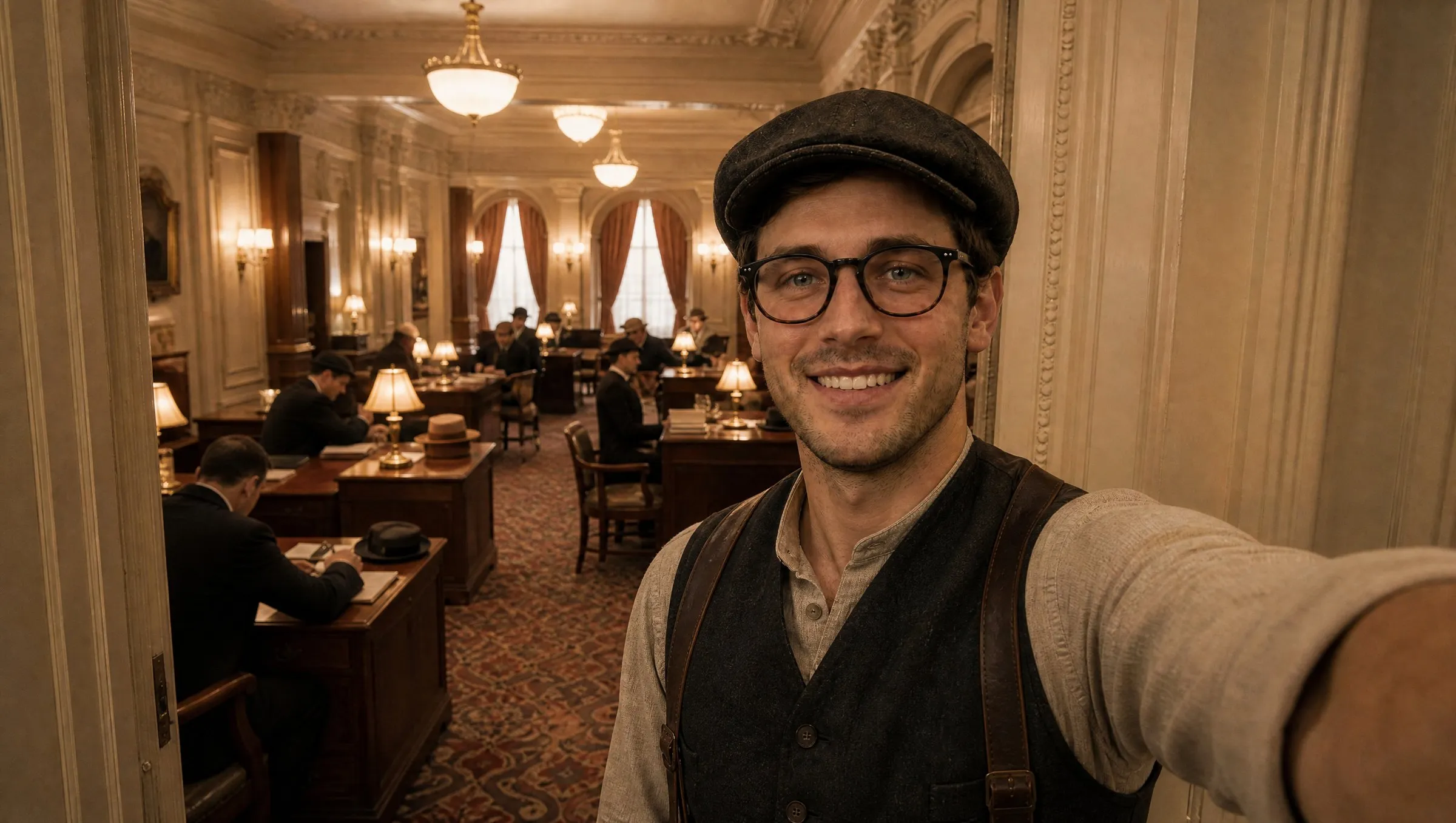
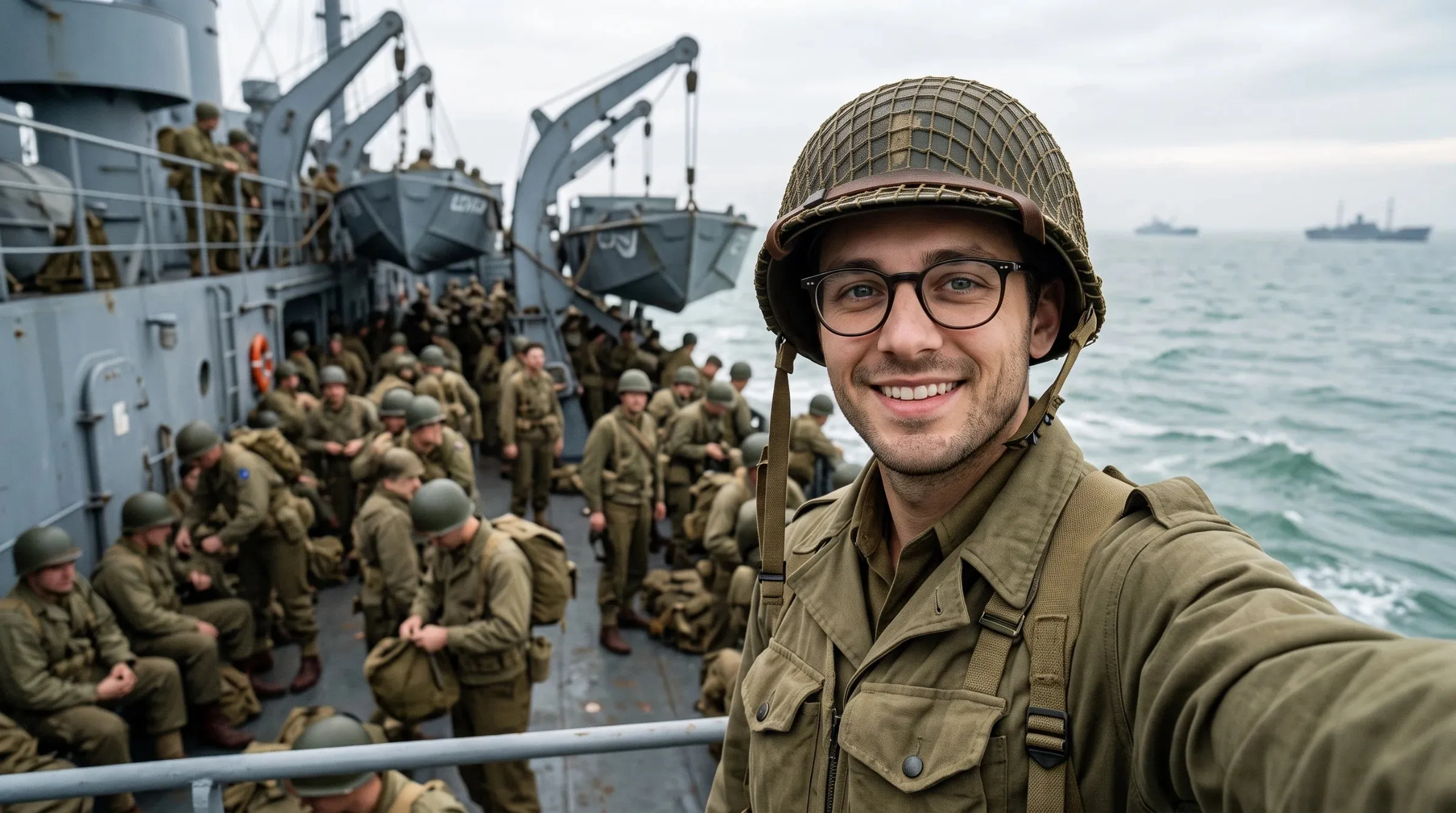
Straight off the vlog camera

Miles’s camera roll

Every stop on the voyage, as Miles filmed it. Tap a selfie to open it.

Real people, real stories

Who Miles meets

Everyone Miles meets in this episode was a real person who was on board. Here’s who they were, and what happened to them.

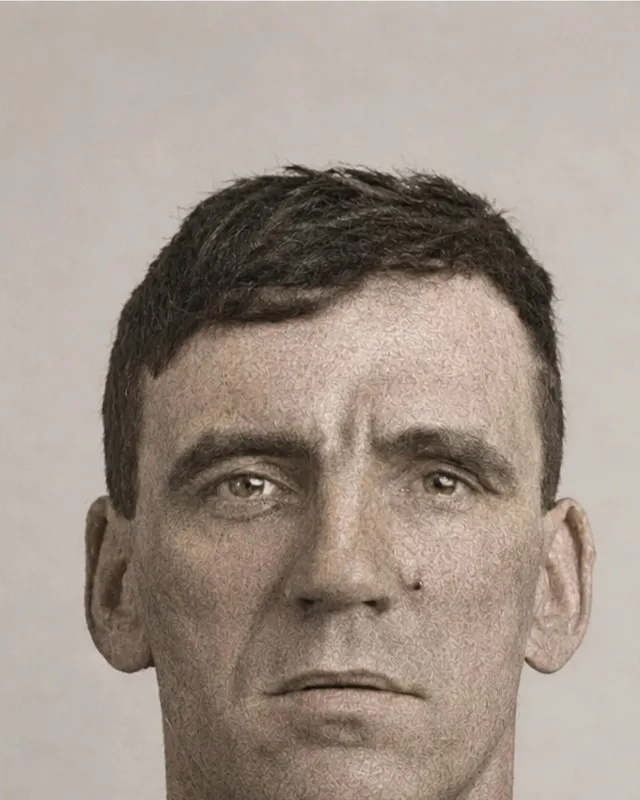
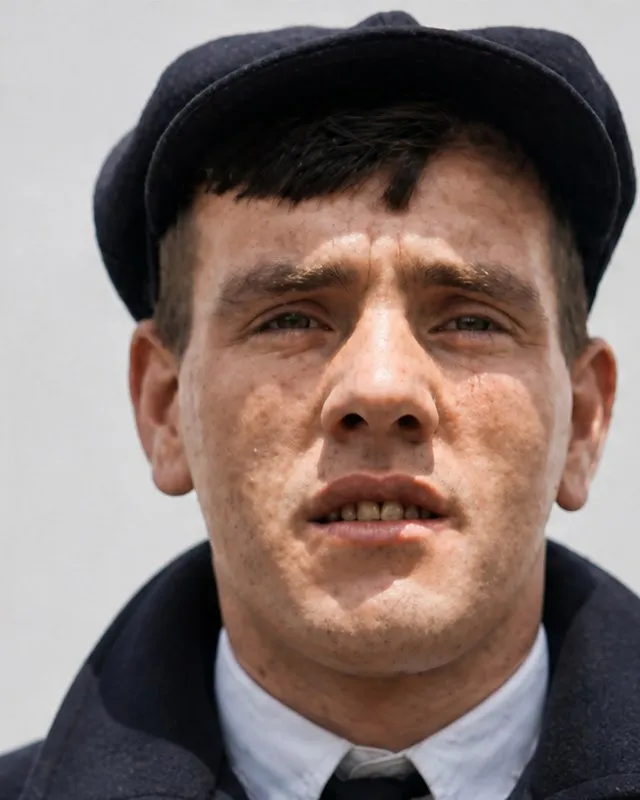
Frederick Barrett, as portrayed in the episodeLeading Fireman, Boiler Room 6Frederick Barrett
Karen Marie Abelseth, as portrayed in the episodeThird-class passenger, aged 16Karen Marie Abelseth
Frederick Fleet, as portrayed in the episodeLookout, crow’s nestFrederick Fleet
Jack Phillips, as portrayed in the episodeSenior wireless operatorJack Phillips
William Murdoch, as portrayed in the episodeFirst OfficerWilliam Murdoch
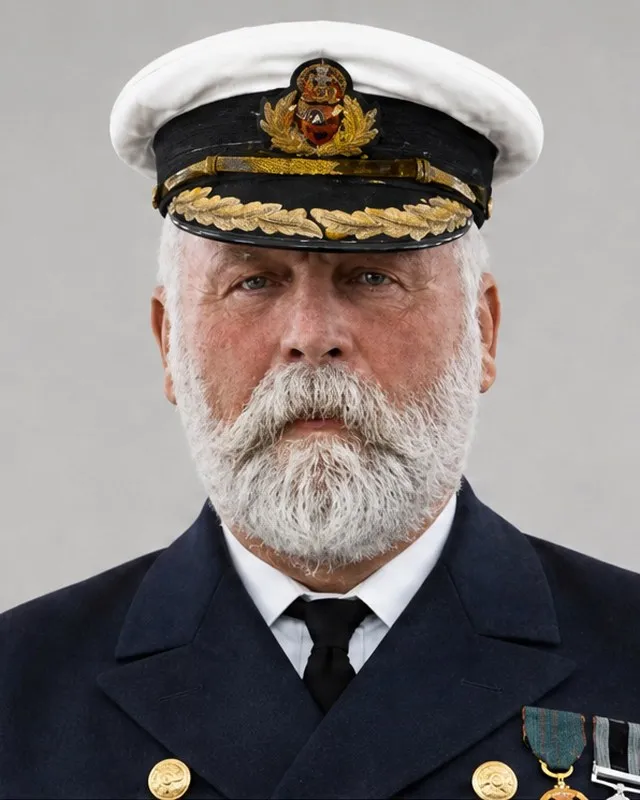
Captain Edward Smith, as portrayed in the episodeCaptain of RMS TitanicCaptain Edward Smith

Read their real biographies: Frederick Barrett · Karen Marie Abelseth · Frederick Fleet · Jack Phillips · William Murdoch · Captain Edward Smith (Encyclopedia Titanica)

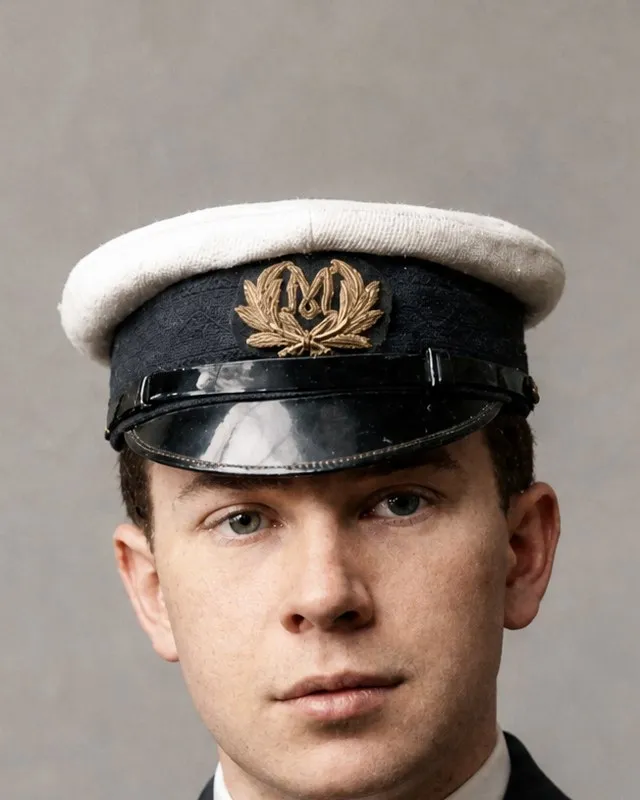
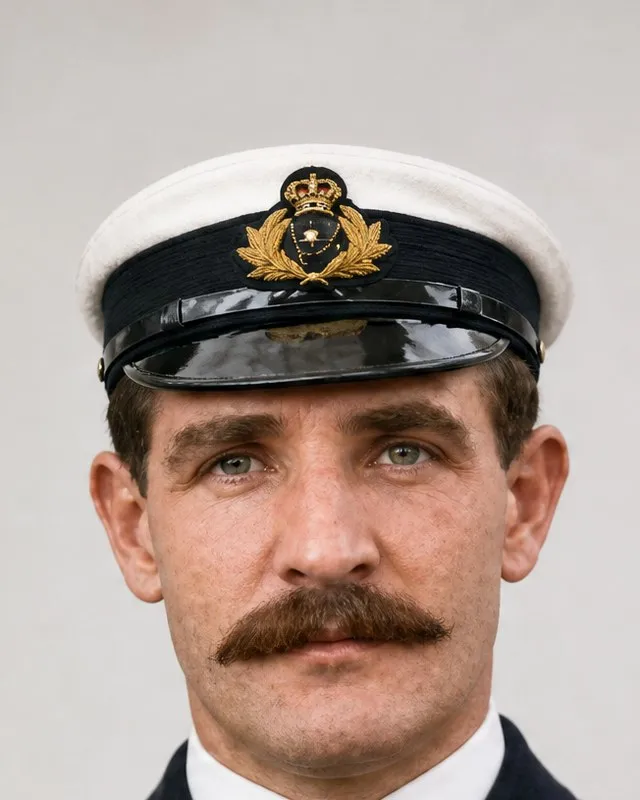
Tap a portrait to read their story. Flip three to earn a passport stamp. Portraits are AI reconstructions based on period photographs and records.

Miles’s pop quiz

Were you paying attention?

  1. 1
  2. 2
  3. 3
  4. 4
  5. 5
  6. 6
Question 1 of 6
Q1

Question 1 of 6: Where was Titanic built?

Honesty box

What’s reconstructed or uncertain

  • All the visuals in the episode are AI-generated reconstructions. People, places and events are shown as accurately as our research allows, but they are not photographs.
  • Murdoch’s exact orders on the bridge are reconstructed from other survivors’ accounts, because he did not survive to give evidence.
  • Exactly how the hull was damaged is still debated. “Damaged across several compartments” is safer than the old “one giant gash” image.
  • How many compartments flooded is counted as five or six, depending on whether you include Boiler Room 5.
  • Which song the band played last has never been settled.
  • Passenger and death totals vary slightly between sources, so we say “about” and “just over”.

Talking points

Classroom corner

Big questions to use after watching, at school or around the dinner table. Open one up to dig deeper.

  1. 1
    Seeing in the dark

    Why was the iceberg so hard to spot?

    No moon, a flat-calm sea and no waves breaking at the iceberg’s base. The lookouts had no binoculars either.

    +Dig deeper
    • Try it: switch off the lights and see how close something has to be before you notice it.
    • If you were the lookout, what would you have asked for before your shift?
  2. 2
    Messages that got stuck

    The warning was on the ship. Why didn’t it reach the bridge?

    The Mesaba’s 9:40 pm ice warning never made it to the officers. Jack Phillips was busy sending a backlog of passengers’ telegrams, but he didn’t survive, so we can’t ask him exactly why.

    +Dig deeper
    • Has an important message ever got lost in a busy group chat or inbox? What happened?
    • How could the wireless room have flagged the urgent messages?
  3. 3
    Rules and safety

    Twenty lifeboats for about 2,200 people. Why was that legal?

    The rules were written for much smaller ships and hadn’t been updated. After Titanic, they changed: lifeboat seats for everyone on board.

    +Dig deeper
    • Can you think of a rule today that changed after something went wrong?
    • Who should decide what’s ‘safe enough’: shipowners, governments or passengers?
  4. 4
    Work below decks

    What would a shift in Boiler Room 6 feel like?

    159 furnaces fed by hand, in heat so fierce that many firemen worked in their vests. Most passengers never saw this part of the ship.

    +Dig deeper
    • Write five words for what you would see, hear, smell and feel.
    • Why do you think we hear more about first-class passengers than the firemen?
  5. 5
    Being a history detective

    How do we actually know what happened?

    Weeks after the sinking, survivors like Fred Barrett and Frederick Fleet gave evidence to two official inquiries. You can still read every word.

    +Dig deeper
    • What’s the difference between an eyewitness account and a story told years later?
    • Why might two survivors remember the same moment differently?

Go deeper

Sources & further reading

More from the logbook

The Ship’s Post

Get a postcard from Miles.

One email when a new episode lands, plus the free classroom printables. No spam, ever.

Time-travel passport

Your stamps

0 of 8 stampsExplore the site to collect them all.
  1. All aboard?Press play on an episodeGo there →
  2. Navigator?Play the voyage on the chartGo there →
  3. Night watch?Scroll the timeline through to dawnGo there →
  4. Wireless detective?Solve the case of the missing warningGo there →
  5. People spotter?Flip three portraits of the real peopleGo there →
  6. Quizmaster?Finish Miles’s pop quizGo there →
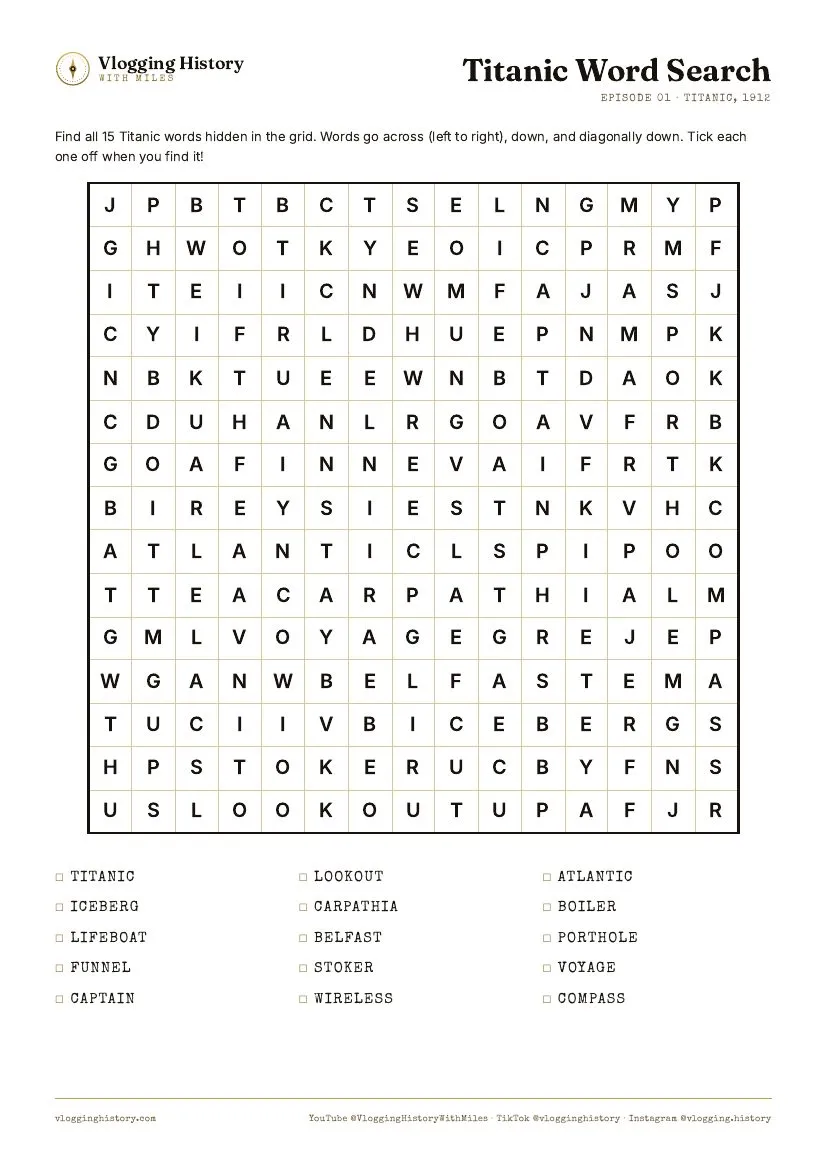
  7. Archivist?Open one of the free printablesGo there →
  8. Time council?Vote on where Miles goes nextGo there →
Print my certificate

Collect every stamp to unlock your Time Traveller certificate. Your stamps are saved in this browser only.